No products in the cart.

How Two Sisters Became Fashion Entrepreneurs with Iyanga Woman
The Power Partnership Behind Iyanga Woman: An Interview with Her Network
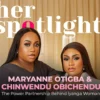
Maryanne Otigba and Chinwendu Obichendu are sisters, lawyers, and the visionary fashion entrepreneurs whose shared love for fashion led them to co-found Iyanga Woman, a brand redefining ready-to-wear elegance for the modern African woman.
Maryanne, with a deep appreciation for craftsmanship and an eye for detail, established Akwa Iyanga, a bespoke fashion house celebrated for its sophisticated, custom-made pieces. Her design expertise and creative direction now shape Iyanga Woman, bringing refinement and personalization to ready-to-wear fashion. Her legal background helps structure the brand for long-term growth, ensuring a solid foundation for expansion.
Chinwendu, a strategic thinker with a sharp for structure, transitioned from tackling financial crimes at Nigeria’s Apex Bank to the fashion industry with purpose and clarity. She oversees Iyanga Woman’s operations, strategy, and brand vision, driven by her belief that elegance should be accessible and effortless. Passionate about event dressing, she set out to help women find stylish outfits without the stress of custom tailoring.
Together, Maryanne Otigba and Chinwendu Obichendu are building a globally recognized brand that celebrates African women while proving that they can lead in both fashion and enterprise. As dedicated fashion entrepreneurs, their work is rooted in impact, structure, and a shared commitment to making sophistication a staple of everyday style.
In a few words, tell us how you decided to work together-not just as sisters, but as business partners.
Our decision to work together stems from shared experiences and mutual support. Growing up, we consistently collaborated, and this synergy naturally extended into our professional lives. With our legal backgrounds, we recognized the benefits of combining our skills to navigate business matters with precision and expertise.
Many business partnerships struggle, but partnerships with family can be even more complex. How do you navigate the intersection of family dynamics and business decisions?
Navigating family dynamics and business decisions requires clear communication, defined roles, and mutual respect. In our partnership, Maryanne’s exceptional people management skills complement my strengths, fostering a harmonious work environment.
Her ability to understand and leverage our individual strengths enables efficient decision-making and enhances our business’s overall performance.
What’s one thing about your sister that makes your partnership so powerful?
One thing that makes our partnership so powerful is our complementary strengths and trust in each other’s expertise. Maryanne brings a unique perspective and skill set that perfectly balances mine (Chinwendu), allowing us to tackle challenges from multiple angles.
Our ability to communicate effectively, respect each other’s opinions, and leverage our individual strengths has been instrumental in driving our shared vision forward. It has enabled us to achieve far more together than we could alone, and I’m grateful for the opportunity to collaborate with someone I admire and trust.
Her Network: Maryanne, as someone with a design background, and Chinwendu, with your strategic mind-how do you handle creative differences, and what’s your process for resolution?
Maryanne Otigba: I view creative tension as a sign that we’re pushing boundaries. When there’s a difference in perspective, I first make sure I’ve really understood what Chinwendu is trying to achieve strategically. I’ll ask: What’s the core goal here? Then I can align my design ideas not just to look good, but to work to drive the right behaviour or emotion. I also bring sketches or prototypes early, so we can visually evaluate directions together rather than argue abstractly.
Chinwendu Obichendu: I see design not just as aesthetics but as a vehicle for delivering on our strategic promise. So, when Maryanne brings a bold visual direction that challenges what I expected, I pause and consider why it feels risky. Is it misaligned, or just unfamiliar? I’ll share data or audience insights to ground the conversation. If we’re stuck, we test. We;ll put both versions in front of real users or stakeholders to see what resonates.
Maryanne, Akwa Iyanga built your reputation in bespoke fashion. How did it feel to expand into ready-to-wear, and what did you have to unlearn or relearn in this transition?
Akwa Iyanga was deeply personal for me; it was about heritage, craftsmanship, and storytelling through bespoke fashion. Every piece was an intimate dialogue with the client, one-on-one. So, moving into ready-to-wear felt both exhilarating and unsettling at first. I used to think: If it’s not custom, can it still carry soul? But what I’ve relearned and this has been humbling is that impact scales differently.
With ready-to-wear, you’re not tailoring to one body but to a broader identity, a collective experience. And that’s powerful in its own right. I had to adapt my process shift from slow, artisanal pacing to designing systems, thinking in collections, and not just garments. But I held onto what mattered, integrity in fabric, narrative in design and that emotional spark when someone wears something and feels seen.
So, it wasn’t about abandoning bespoke but evolving its values into a new form. It’s been a growth arc personally, creatively, and as a businesswoman.
Chinwendu, your desire to help women access stylish outfits “without the stress of custom tailoring” fueled your decision to co-found this brand. What specific pain points were you hearing from women that sparked this ready-to-wear?
My passion for helping women access stylish outfits without stress stemmed from observing a common dilemma at weddings. Many women would express frustration about finding the perfect outfit, particularly when not in an asoebi or even when they were, worrying about limited wearability beyond the event.
Recognizing this gap, I saw an opportunity to provide a solution, empowering women to effortlessly find and wear outfits that boost their confidence.
Let’s talk about your debut collection, Soul Sisters. What story were you trying to tell through these pieces?
Soul Sisters was a love letter to the women who raised me, stood beside me, challenged me, and helped me find my voice. It wasn’t just about fashion, it was about kinship. Choosing family. The invisible threads that hold us together when life gets loud or lonely. We didn’t just want people to wear the clothes, we wanted them to feel seen in them.
If Iyanga Woman could be remembered for changing one thing about how women experience fashion or how they see themselves, what would that be?
We envision Iyangwa women as unapologetically confident, effortlessly elegant, and driven to succeed. They’re women who defy categorization, embracing their individuality with poise and sophistication. Above all, they’re goal oriented, inspiring others with their strength and resilience.